In the fast-changing digital age, AI is transforming the way we communicate, work, and play on the internet. Some of the coolest new technologies are AI avatars and chatbots — two AI-driven products that look similar at a glance but have very different applications.
Chatbots and AI avatars are both applications of natural language processing, but they serve different purposes. While they both can be used to create a human experience, AI avatars provide personality and presence in digital conversations, and chatbots are text-based automation for answering questions quickly.
In this article, we will explain how AI avatars and chatbots differ, what their respective advantages are, and how today’s innovative AI avatar generators are creating the future of digital engagement.
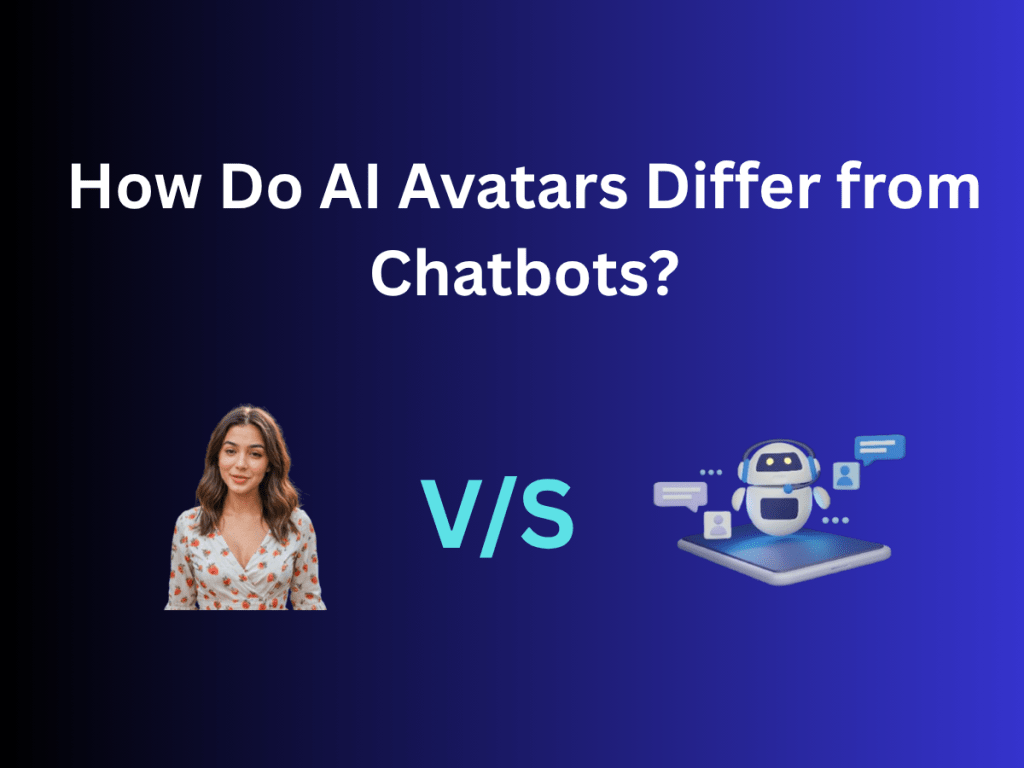
What Is an AI Avatar?
Someone powered by artificial intelligence. It can imitate human facial expression, gestures, and speech pattern. Put simply, an AI avatar is your digital double — it can stand in for you or your brand in videos, meetings, customer service, or even virtual worlds.
AI avatars are generally generated from an AI avatar maker, where you can upload a photo, choose a voice, and even make your avatar “talk” like you with a voice-to-text feature and more.
Example use cases:
- Virtual presenters or video hosts
- AI-powered customer assistants with human faces
- Personalized brand influencers
- Content creators who prefer not to appear on camera
Essentially, AI avatars bridge the gap between humans and technology by adding a visual and emotional layer to digital interaction.
What Is a Chatbot?
A chatbot is a text-based AI system, and user communication is via written conversations. Chatbots can respond to questions, offer support, or help customers with simple processes such as ordering, booking, or troubleshooting.
Chatbots don’t have faces, voices, or expressions, unlike AI avatars. They are mainly used on websites, messaging applications or customer service portals.
Example use cases:
- Customer support on websites
- Automated replies on WhatsApp or Messenger
- FAQ assistance and product recommendations
Chatbots focus on functionality and speed, while AI avatars emphasise human-like connection and engagement.
Key Differences Between AI Avatars and Chatbots
| Feature | AI Avatar | Chatbot |
| Form of Interaction | Visual and auditory (talking avatars) | Text-based |
| Technology Used | AI + Video synthesis + Speech generation | NLP (Natural Language Processing) |
| User Experience | Interactive and emotional | Functional and task-oriented |
| Customization | Highly customizable (face, voice, style) | Mostly limited to text tone and structure |
| Best Use Case | Marketing, video content, virtual communication | Customer support, FAQs, and automation |
How AI Avatar Generators Are Changing the Game
Modern AI avatar generators are revolutionising how brands and individuals communicate online. With these tools, anyone can create realistic, speaking avatars without needing to appear on camera or hire actors.
For example, tools like Tagshop, Synthesia, and HeyGen let you:
- Upload a photo or use a pre-made digital character
- Choose from multiple voice options and languages
- Generate videos with your avatar speaking your script
- Personalize your digital identity for different platforms
These AI avatar generators are ideal for businesses that want to build trust and engagement while maintaining scalability and consistency across all communication channels.
When to Use an AI Avatar vs. a Chatbot
Knowing when to use each tool is key to making the most of them. Here’s a quick guide:
Use AI Avatars When:
- You want to make video content without filming yourself
- You need a virtual spokesperson for marketing or training
- You want to humanize your brand or online presence
- You aim to create personalized video messages at scale
Use Chatbots When:
- You want to automate customer support
- You need to answer FAQs or collect data
- You handle large volumes of inquiries
- You require quick, text-based responses
In many cases, businesses now combine both—using chatbots for quick responses and AI avatars for personalized engagement or video communication.
The Future: AI Avatars and Chatbots Working Together
The most exciting aspect of this evolution is that AI avatars and chatbots are beginning to combine. Tools of the future will surely integrate the conversational capabilities of chatbots with the visual and emotional intelligence of avatars.
Imagine signing into a site and a talking AI avatar not only answers your questions but also remembers your preferences and leads you visually. This merger will transform the way brands engage with consumers in the digital space.
With the continued advances in AI avatar creation, avatars will become more realistic, emotionally intelligent, and dynamic—interpreting tone, body language, and user feelings on the fly
Benefits of Using AI Avatars in Digital Communication
Using AI avatars in your business or personal brand brings several unique advantages that chatbots alone can’t offer:
- Human connection: People trust faces more than text.
- Brand personality: A consistent visual presence boosts recognition.
- Multilingual communication: Avatars can speak any language fluently.
- Scalability: One avatar can deliver thousands of videos or interactions daily.
- Cost efficiency: No need for studios, cameras, or professional actors.
These benefits explain why companies are turning to AI avatar generators like Tagshop to build strong, authentic connections with their audiences.
FAQs: AI Avatars vs Chatbots
1. Can chatbots and AI avatars work together?
Yes, many businesses integrate both. Chatbots handle text-based inquiries, while AI avatars deliver video messages or virtual support.
2. Are AI avatars better than chatbots?
Not necessarily—they serve different purposes. Chatbots focus on quick responses, while AI avatars focus on visual engagement and personalization.
3. What is an AI avatar generator?
An AI avatar generator is a tool that uses artificial intelligence to create lifelike, talking digital characters for video and communication.
4. How can I use AI avatars for my business?
You can use AI avatars for marketing, explainer videos, virtual assistants, online training, and social media content.
5. Which is the best AI avatar generator?
Tools like Tagshop, Synthesia, and HeyGen are among the most popular options for creating high-quality AI avatars easily.
Final Thoughts
As great as chatbots are for automation, AI avatars provide the human aspect that today’s users want. It doesn’t involve selecting one for the future-it involves integrating both for more intelligent, personal digital experiences.
Using an AI avatar generator, you can create a face and voice for your brand that makes every interaction you have online a little more human, a little more memorable, and a little more understandable.
Author Bio – Andrey
Andrey is an AI technology writer and digital strategist specializing in AI avatar generators and creative automation tools. He helps brands and creators use AI avatars to build stronger connections and tell their stories through digital innovation.
 AI Avatar Photo Blog
Leave a comment